
Overlooked Higher Education Marketing Strategies To Maximize Your Budget
July 31st, 2026 by
Note: This post was updated by Jeanne Lobman July 31th, 2026 to reflect current best practices. It was originally published on April 28th, 2025.
Key Inights
- Track Key Metrics to Justify Budget Increases: Monitoring cost per inquiry (CPI) and cost per enrolled student (CPES) helps institutions prove ROI and secure additional marketing budget.
- Align Campaign Priorities With Institutional Goals: Universities that connect their marketing strategies to enrollment objectives see better results and more efficient spending.
- Leverage a Full-Funnel Marketing Approach: A blend of SEO, paid search, content marketing, and social media engagement ensures that institutions reach prospective students at every stage of their journey.
Are you using the right higher education marketing strategies to maximize your budget?
If your budgeting methods don’t reflect today’s digital-first student journey, you probably aren’t.
This blog will provide actionable steps to refine your marketing strategy and optimize your budget.
Backed by Search Influence’s industry benchmarks and real-world case studies, these insights will help you develop a comprehensive digital advertising strategy that maximizes enrollment impact while keeping costs in check.
7 Things You Aren’t Considering in Your Higher Education Marketing Plan and Budget
Most of the data in this blog is from Search Influence’s Higher Ed Marketing Metrics Research Report: What Gets Measured Gets Managed, conducted which we conducted in collaboration with UPCEA.
This study established the sector’s first benchmarks for higher education cost per inquiry (CPI) and cost per enrolled student (CPES) and explored whether online and professional education units track critical metrics that better inform outcomes.
Note: Not every item on this list requires a new budget, and you don’t have to tackle them all at once. But they build on each other: without tracking and benchmarks in place, you can’t measure whether your channels are actually moving the needle on campaign goals. Taking even one step below is progress. Just know that some depend on others already being in motion.
1. Ensure upfront buy-in from key stakeholders on goals and objectives
Cost: None | Effort: Low to Medium (requires multi-department coordination) | Impact: High
For a higher education marketing strategy to be effective, marketing teams and institutional leadership must align on the right goals and success metrics from the start.
Higher education marketing teams that secure upfront buy-in from stakeholders see more satisfaction, stronger support, and greater budget flexibility. By aligning early on the right success metrics, institutions can make smarter marketing investments, increase efficiency, and ultimately drive better enrollment outcomes.
A strong higher education marketing strategy:
- Clearly defines what success looks like based on measurable, data-driven insights
- Compromises with leadership by setting achievable goals alongside stretch goals that challenge the team while remaining realistic
- Proactively communicates marketing’s impact on enrollment to ensure continued stakeholder support
Ways to start
- Hold a kickoff meeting with leadership to co-define 2–3 measurable success metrics (e.g., CPI target, inquiry volume) before the campaign launches
- Create a one-page “marketing goals brief” that leadership signs off on, tying each initiative to a specific institutional priority
- Set a recurring (monthly/quarterly) check-in cadence with stakeholders to report progress against agreed upon metrics
2. Track relevant metrics
Cost: Low (tooling/time) | Effort: Medium | Impact: High

Nearly one-third (31%) of higher ed marketing professionals report that they cannot directly correlate their marketing success to enrollment because they lack proper metric tracking.
Without these insights, institutions risk inefficient spending, missed enrollment targets, and a weakened ability to compete in an increasingly crowded market.
While most marketing teams track the source of inquiries, many fail to track the cost per inquiry in higher ed, leaving a critical gap in understanding marketing efficiency.
Our research shows:
- 73% of marketing units track the source of inquiries for online and professional education programs
- Only 46% track CPI
- Only 43% track CPES
- Nearly 17% do not track any of these three key metrics
To gain leadership’s trust and approval, marketing teams must advocate for tracking relevant content performance, targeted advertising success, and CPI benchmarks while aligning expectations around achievable enrollment growth.
Ways to start
- Build a simple CPI-by-channel tracking sheet (or dashboard) that updates from ad platform and CRM data
- Tag inquiry sources in the CRM so CPI can be calculated per channel, not just in aggregate
- Set a recurring monthly metrics review specifically for CPI/CPES, separate from general performance reporting
3. Create a reliable benchmark for your campaign performance
Cost: None–Low | Effort: Low | Impact: Medium
Institutions must have clear benchmarks for evaluating the efficiency of their marketing expenses to ensure effective higher education marketing.
Tracking these higher ed marketing benchmarks helps institutions advocate for additional budgets, refine student recruitment strategies, and boost enrollment.
CPI and CPES provide precisely that. CPI is one of the most critical metrics in student recruitment, as it helps determine the effectiveness of digital marketing and traditional marketing efforts. Institutions commonly track CPI for specific channels like paid search, organic search, and web pages, allowing them to measure the success of campaigns across multiple platforms.
Among higher ed institutions offering online and professional education programs, the average CPI is $140.
However, CPI varies widely, ranging from $29.03 to $450, depending on factors like audience targeting, advertising platforms, and campaign type.
While CPI measures the cost of generating leads, CPES provides a deeper look into the student enrollment process by calculating the cost of acquiring each student who officially enrolls. This metric is critical for institutions looking to:
- Evaluate the efficiency of marketing expenditures
- Optimize digital and traditional marketing strategies
- Align marketing spend with student recruitment goals
Higher education institutions that track CPES gain valuable insights into which strategies and campaigns contribute the most to actual enrollments. This allows marketing teams to refine their approach, ensuring they target the right prospective students while minimizing wasted budget.
Ways to start
- Use a CPI/CPES calculator to establish a baseline before optimizing
- Pull industry benchmark data (like the $140 average CPI) and set an internal target relative to it. Do not just track in isolation.
- Re-benchmark quarterly as campaigns evolve, rather than setting a benchmark once and leaving it static
4. Align your campaign priorities with institutional goals
Cost: None | Effort: Medium (cross-team coordination, not spend) | Impact: High
For higher education marketers, success is about supporting priorities, not just inquiries. Aligning digital marketing campaigns with institutional goals is key to driving meaningful results and maximizing available resources. This helps support budget efficiency, enhance institutional reputation, and drive stronger engagement with prospective students.
Each year, educational institutions set strategic goals that impact everything from recruitment to retention. Whether the focus is on increasing applications for specific programs, expanding online offerings, or strengthening engagement with alumni, marketing must be in sync with these objectives.
Budgeting plays a crucial role in this alignment. While foundational initiatives — such as search engine optimization, digital advertising, and content marketing — remain essential, institutions also need flexibility to support emerging priorities. For example, if a university is launching a new degree program, marketing must be prepared to adjust strategies to reach the target audience and attract prospective students effectively.
Collaboration between marketing and academic departments is also key. When marketing teams work closely with department leaders, they gain deeper insights into program strengths, career outcomes, and differentiators that resonate with students. This partnership ensures that marketing technology and messaging are optimized to highlight what makes the institution unique.
Ways to start
- Hold a quarterly alignment meeting between marketing and academic department leaders to surface upcoming program launches or priority shifts
- Maintain a shared “institutional goals” doc that marketing references when planning quarterly campaign priorities
- Build flexibility into the budget (e.g., a reserved 10–15% contingency) so marketing can respond to new priorities without a full re-plan
5. Create channels to reach your audience at every stage of the funnel
Cost: Medium–High (varies significantly by channel mix) | Effort: High | Impact: High
Reaching prospective students at every stage of the enrollment funnel requires a mix of traditional and digital methods that work together to create a seamless experience. Many higher education institutions leverage a combination of search engine marketing, email marketing, paid advertising, and content marketing, but even those actively investing in these strategies often have opportunities to refine their approach for better results.
According to our Higher Ed Marketing Metrics Research Study, email marketing and search engine optimization are most often managed in-house, while Google paid search advertising, Meta paid advertising, digital display advertising, and LinkedIn advertising are typically outsourced.
This can lead to many institutions running campaigns in silos, missing out on the opportunity to create a seamless experience across multiple touchpoints. Running full-funnel campaigns with different objectives (such as brand awareness, lead generation, and retargeting) ensures that ads and content engage students at different decision-making stages.
While these are foundational higher education marketing strategies, success depends on how well these channels are optimized and integrated.
For SEO, institutions must take a more strategic approach, embracing evolving trends like AI search and social search to ensure content remains visible to students searching for programs and schools. A well-optimized website with high-performing landing pages and strong student success stories helps improve organic reach and conversion rates.
With paid ads, incorporating CRM data into campaigns can enhance targeting, allowing universities to reach students who are more likely to enroll. An example of this may be uploading qualified lead data and optimizing for those conversions in the platform, instead of all inquiries, making better use of your budget.
Optimizing nurture campaigns can significantly impact the conversion rates from inquiry to application. Many institutions still rely on generic follow-up emails rather than implementing personalized, automated sequences that guide students through the decision-making process. Experimenting with new email marketing tactics, such as interactive emails or dynamic content based on student interests, can improve engagement.
Video marketing and social media engagement also continue to grow in importance, helping universities connect with students in more authentic and compelling ways. For example, showcasing student success stories through video content can build trust and encourage prospective students to take the next step.
When planning your marketing strategy for the year, consider what new tactics you want to explore and what budget you might need for testing. Allocating resources for research and development in new marketing tools and techniques gives your institution a competitive edge in an increasingly crowded digital space.
6. Ask for more budget to drive better results
Cost: None (it’s an ask, not a spend) | Effort: Low | Impact: High if successful
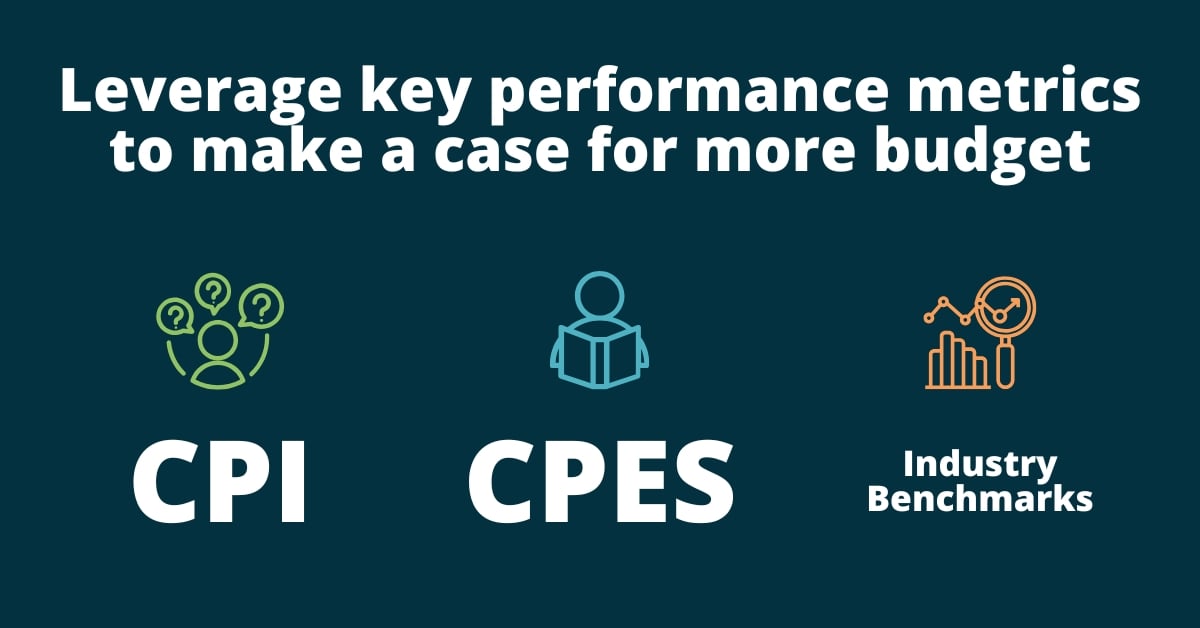
If leadership expects an increase in enrollment, marketing teams need the financial resources to support those goals. Leveraging valuable insights from key performance metrics can help you make a strong case for increasing your marketing budget to maximize impact.
When asking stakeholders for more budget, it helps to show them how much your competitors are spending.
Marketing budgets vary widely, but Search Influence data from the 2022–2023 fiscal year provides a clear picture of industry benchmarks.
Among professional and online education units:
- 25% spent between $200,000 and $500,000 on marketing efforts
- 23% spent $50,000 to $200,000 on marketing expenses
- On average, professional and online education units spent $848,712
Higher ed institutions increasingly prioritize digital technology to attract prospective students, with a significant portion of marketing spend going to digital advertising.
In the same fiscal year:
- 40% of professional and online education units allocated $100,000 to $500,000 to digital advertising
- 19% spent over $1 million on digital ad campaigns
- The average digital ad spend was $800,970
A separate UPCEA Marketing Survey found that as of 2024, online education units averaged an annual marketing budget of $1.2 million (median $644,000), representing about 11.9% of unit revenue on average (median 5.3%). Only a third of marketing leaders (32%) felt their current budget was robust enough to meet institutional goals, and just 28% expected an increase.
That shortfall isn’t easing. EAB’s 2026 Higher Ed Marketing Outlook> found that 69% of higher education marketing budgets stayed flat or decreased from AY 2024–25 to AY 2025–26, and 80% of marketing leaders cite limited budget as their top barrier to hitting enrollment goals. If your budget request keeps stalling, you’re not alone, but that also means the case you build needs to be airtight.
If you need more budget to drive better results, tracking key metrics like CPI can support your case to key stakeholders. For example, if your higher ed institution has a CPI of $100 for a specific program, you have the building blocks to make the case that an additional $10,000 investment could generate 100 more inquiries. By understanding your enrollment funnel, you can estimate how many of those inquiries will convert into enrolled students — providing leadership with a data-backed projection of revenue impact.
7. Use a blend of agency and in-house support
Cost: Variable (depends on mix chosen) | Effort: Medium | Impact: High
Balancing in-house and agency support is crucial for higher education marketing teams looking to maximize their impact.
Finding the right mix ensures that universities can optimize resources, effectively engage students, and improve overall marketing performance.
But how do you find that perfect balance for your higher ed institution?
Start by asking:
How many full-time employees work in our marketing department?
A successful marketing strategy demands significant time, expertise, and resources.
Smaller teams of 1-3 people are unlikely to have the time and skills required to handle marketing demands fully in-house.
4-5 member teams would be suited to do some aspects of marketing, like content writing and SEO-related website updates, while more complex tactics like strategy, off-site SEO, and evaluation of results would be better handled by the agency. At this size of a team, a tight-knit partnership will drive strong results.
Looking at teams of 8-14 — this is where you can begin to take on more in-house, as long as you have a dedicated marketing strategist to plan, guide execution, and evaluate. With just one team member fully focused on strategy, an agency can back up your team with up-to-date expertise and insight through audits or consulting.
Large teams of 15 or more are likely well-equipped to handle marketing in-house, depending on what other priorities you have.
What strategies does our university already have in place for SEO?
Consider what tactics and work you already have in place for SEO. Is it a robust or piecemeal strategy? How often do you work on these tactics?
Some questions to ask are:
- Do you have identified target keywords for top programs?
- Are you updating content with SEO goals in mind?
- Do you have a link-building strategy or are you just taking what comes naturally?
- Are you using tools like Semrush or Moz and Google Search Console?
- Does your team stay up to date on SEO trends and changes? For example, are you exploring and testing tactics for AI search?
- Finally, are you diagnosing performance?
How strongly do you agree with this statement?
“My important programs or degrees show up in search results.”
How well you rank today is a pretty good indicator of how well-equipped your team is to handle SEO internally.
If they are ranking well today, you may be set with your current strategy and team.
If they are not ranking well and driving traffic and quality leads, then you should consider an agency.
Which capabilities exist on our team?
The skills needed to conduct SEO are varied and not typically found in one person. For example, a team member may be great at writing content and PR outreach but may not have data analysis or technical SEO skills.
If you have all these skills in-house or can foster them, then you can set yourself up for SEO success internally:
- SEO strategy development
- Creating SEO-optimized content
- Technical SEO expertise
- Access to and knowledge of SEO tools
- Website development and management
- PR outreach for link-building
- Data analysis
If you can’t, relying on a credible agency gives you access to these capabilities immediately without having to recruit, retain, and train staff.
How much time does our team have available for our SEO priorities?
Managing SEO in-house demands significantly more time than working with an agency.
Successful in-house teams handle everything from keyword research and content creation to technical updates and performance monitoring.
So, how much time are we talking about?
If your team has less than 8 hours/month, that’s about enough time to manage an agency partnership.
If they have 8-20 hours/month, they have time to do some SEO basics within typical marketing work.
If they have 21-40 hours/month, they can be a little more strategic, do some basics, and spend some time monitoring results. They may also have some time to give tips to other team members on how to incorporate SEO into their work.
If they have over 40 hours/month to dedicate to SEO, they should be able to strategize, do some basics themselves, direct other team members, and evaluate results.
Ultimately, it’s up to you to consider whether your university has the internal DNA and capacity to succeed independently. If not, an agency will help shoulder the effort to meet your goals and drive consistent SEO performance.
Not sure where you land? Explore Search Influence’s higher education services to see how a blended or full-service partnership could work for your team.
Budget-Friendly Paid Advertising Tactics
Paid media often gets the biggest share of a higher ed marketing budget, which also makes it the easiest place to lose money to inefficiency. These three tactics focus specifically on getting more out of the dollars you’re already spending, without asking for a bigger budget.
1. Mine your search terms and build negative keyword lists
Cost: None | Effort: Low | Impact: Medium
The cheapest way to stretch a paid search budget isn’t spending more. It’s stopping the spend that never converts. On non-branded search, unmanaged negative keywords let ads show for job-seekers, “free course” hunters, and wrong-degree-level queries that will never enroll. For higher ed, that’s real money leaking to searches like “teaching jobs,” “free online classes,” or a bachelor’s-seeker clicking your master’s program ad.
Your Search Terms report already shows exactly what people typed to trigger your ads, so finding this waste costs nothing but attention. Sort by cost, filter to zero conversions, and you’ll see the top terms eating your budget.
Ways to start
- Review the Search Terms report monthly (weekly for newer or high-spend campaigns) and add clear non-converters to a shared negative keyword list so every campaign benefits at once
- Build a standing exclusion list for common higher ed budget-drains: “jobs,” “salary,” “free,” “certificate” (if you sell degrees), and wrong-level or competitor-mismatch terms
- Use phrase-match negatives to catch repeated query patterns without over-blocking adjacent, high-intent searches
- Wait until a search term has enough clicks with zero conversions before excluding it. Cutting one off too early risks blocking traffic that just needed more time or a different bid.
2. Lean on retargeting before net-new prospecting
Cost: Low | Effort: Low | Impact: High
Re-engaging people who have already visited your program pages or watched your videos is dramatically cheaper than finding someone new, and it helps convert a warmer audience. For a tight budget, that means getting more applications from the same dollars by nudging students who already showed intent.
The key is not to allocate too much budget to retargeting. It only works if prospecting keeps filling the top of the funnel, so treat it as the efficient closer, not the whole strategy.
Ways to start
- Build audiences from site visitors, program-page viewers, and YouTube engagers, then run low-budget retargeting that points them straight to “Apply” or “Request Info”
- Sequence the message: someone who viewed a program page should see an application-deadline reminder, not the same top-of-funnel awareness ad
- Keep a healthy split, so you always have a warm audience to re-engage without starving new prospecting
3. Repurpose organic and student content as paid creative
Cost: Low | Effort: Low–Medium | Impact: Medium
New ad creative doesn’t require a new production budget. Your best-performing organic posts, student testimonials, and success stories are already proven to resonate, and turning them into paid ads is far cheaper than commissioning fresh shoots. This extends the video and student success point already made earlier: authentic, student-voiced content builds trust and encourages prospective students to take the next step, without the polished-production price tag.
Ways to start
- Pull your top organic posts and testimonial clips and adapt them into Meta and Google Demand Gen ads
- Prioritize authentic, student-created and student-voiced content over highly produced spots, as it tends to feel more credible to prospective students
- Test a few repurposed creatives against each other and put budget behind the winners, so creative testing costs pennies instead of a production line item
Highest-ROI Tactics for Stretching a Tight Higher Ed Marketing Budget
Before you decide where to focus, here’s a quick side-by-side view of what each tactic actually costs and delivers.
| Tactic | Cost | Effort | Impact | Best-Fit Team Size |
| Co-define success metrics with leadership upfront | None | Low–Medium | High | Any size |
| Build a CPI-by-channel tracking sheet/dashboard | Low | Medium | High | Any size |
| Benchmark CPI/CPES against industry data quarterly | None–Low | Low | Medium | Any size |
| Hold quarterly alignment meetings with academic departments | None | Medium | High | 4+ |
| Incorporate CRM data into paid ad targeting | Medium | High | High | 8+ |
| Build a data-backed case for more budget using CPI | None | Low | High if successful | Any size |
| Front-load spend in the application-decision window | None (reallocation, not new spend) | Low–Medium | High | Any size |
| Mine search terms and build negative keyword lists | None | Low | Medium | Any size |
| Lean on retargeting before net-new prospecting | Low | Low | High | Any size |
| Repurpose organic/student content as paid creative | Low | Low–Medium | Medium | Any size |
One tactic worth calling out: timing. Most institutions spread their marketing budget evenly across the year, but prospective students don’t make decisions on a flat timeline. Shifting a larger share of spend into the weeks and months when applicants are actively deciding, rather than during earlier awareness-building periods, can improve return without adding a single new dollar to the budget.
Analyzing Effective Higher Education Marketing Strategies
Palo Alto University increased monthly inquiries by 49%
When Palo Alto University wanted to increase prospective student inquiries, they partnered with us to refine their digital marketing efforts and expand their reach.
Initially, Palo Alto University ran Google, Facebook, and SEO campaigns, but their results fell short of their enrollment goals. Our team identified a key opportunity: Their budget was limiting audience reach, meaning they weren’t fully capitalizing on their potential student base. By implementing a strategic, multi-channel approach, we significantly boosted inquiries.
We focused on:
- Expanding campaign targeting to promote four key degree programs
- Increasing investment in paid advertising to engage a broader target audience
- Optimizing on-site content to improve organic search visibility
- A/B testing refreshed messaging to better resonate with prospective students
The results spoke for themselves. Within two quarters, monthly inquiries increased by 49%, exceeding their goal and reinforcing the power of a comprehensive higher education marketing strategy.
Tulane SoPA surpassed their inquiry goal by 58%
For the Tulane School of Professional Advancement (SoPA), meeting enrollment goals required a strategic, data-driven approach to connect with the right prospective students at the right time.
With the launch of three new programs, Tulane SoPA set a target of 500 inquiries per month and partnered with Search Influence to refine their marketing efforts. Recognizing that paid advertising would deliver the quickest impact, we optimized their campaigns for maximum efficiency while improving the overall student recruitment experience.
To help Tulane SoPA reach their goal, we:
- Designed a distinct creative concept with custom illustrations to strengthen brand identity
- Enhanced landing pages to boost conversion rates and guide students through the enrollment process
- Launched Facebook Lead Generation and Google Smart Display campaigns to increase engagement at multiple touchpoints
- Expanded geographic targeting to reach a broader audience aligned with Tulane SoPA’s growth objectives
The impact was immediate. Tulane SoPA exceeded their inquiry goal by 58%, with 80% of all inquiries driven by paid advertising. This success reinforced the value of a well-rounded digital marketing strategy in helping higher education institutions effectively engage students and convert interest into enrollment.
Higher Education Marketing Strategies FAQs
What are the best marketing strategies for higher education?
Winning higher ed marketing strategies starts with SEO, ensuring your programs appear early in a prospective student’s search journey. A well-executed SEO strategy drives long-term organic traffic and enhances visibility across digital marketing channels.
However, digital advertising is equally important for reaching the right students at the right time, providing immediate visibility, and amplifying organic efforts.
By combining SEO with targeted digital advertising, academic institutions can maximize engagement, increase inquiries, and drive more applications.
How does a university increase its visibility?
Universities attract students best by utilizing a mix of SEO and digital advertising.
From optimizing for high-intent keywords and writing engaging blog posts to running targeted Google and social media advertising campaigns, these digital marketing strategies are some of the most efficient ways to attract prospective students.
What are the biggest marketing challenges for universities?
The rise of AI and social search is changing how students find information, requiring universities to adapt their marketing strategies.
Additionally, cookie deprecation and reduced tracking capabilities make it harder to measure campaign success across digital marketing channels.
To stay competitive, universities must refine their education marketing approach to navigate these evolving challenges.
How do universities market on a tight budget?
Universities can stretch a tight budget by prioritizing high-intent, high-efficiency channels, like SEO and paid search targeted to specific programs, over broad-reach traditional advertising. Tracking cost per inquiry (CPI) and cost per enrolled student (CPES) also helps identify which channels deliver the best return, so limited dollars go toward what’s actually converting.
What is the cheapest way to recruit students?
Organic search (SEO) and content marketing typically offer the lowest cost per inquiry over time, since they don’t require ongoing ad spend once content is built and optimized. Referral and alumni-driven outreach can also be low-cost, high-trust channels for reaching prospective students.
What are some low-cost higher education marketing tactics?
Low-cost tactics include optimizing existing website content for SEO, leveraging student success stories and testimonials on owned channels, tightening CRM-to-marketing alignment to avoid wasted ad spend, and using email nurture sequences to convert existing inquiries rather than spending more to generate new ones.
Optimize Your Higher Education Marketing Strategy With Search Influence
Make every marketing dollar count with data-driven strategies designed to boost enrollment and engagement.
At Search Influence, we specialize in SEO, AI SEO/GEO,paid advertising, and analytics-backed marketing strategies tailored for higher education institutions.
Our advanced dashboards consolidate all your marketing metrics in one place, giving you the insights needed to refine your approach and maximize results. We help institutions align marketing efforts with enrollment goals to drive measurable success.
Get exclusive insights into your higher ed marketing performance — download our Marketing Metrics Research Study today.